The Case
Dines v. Office of Congressional Workplace Rights
A manuscripts specialist reported overpayment and damage to the collections. He was dismissed. The record, the decisions and the petition — after a short comic.
Before the documents, a fable
Trial by Combat 2.0A Satirical History of Justice
In the fifteenth century, a scholar who accused a baron could be handed a lance and told to let God decide. Six centuries later we have courts instead. This is a short comic about what changed, and what did not.
Satire inspired by Dines v. Office of Congressional Workplace Rights, U.S. Court of Appeals for the Federal Circuit, No. 2025-1657 (judgment affirmed under Rule 36, without opinion, November 10, 2026). Characters and dialogue are invented and are not a transcript; no real judge or Library official is depicted. The note under each panel says what is documented.
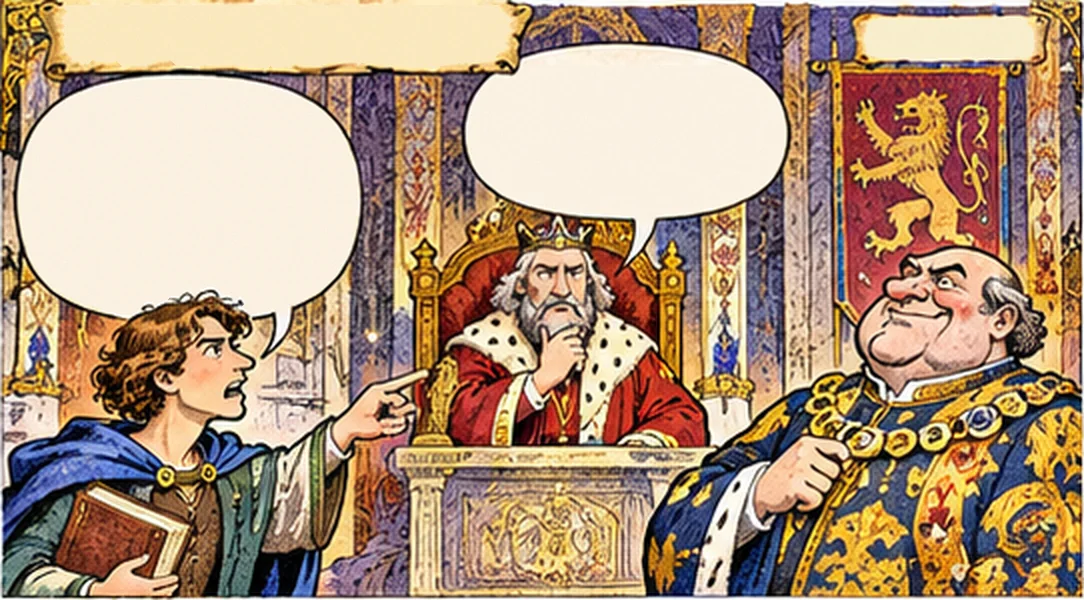 The Complaint
Scholar: The Baron overpays for manuscripts — and lets them rot!
King: A grave charge. Let God decide: trial by combat!
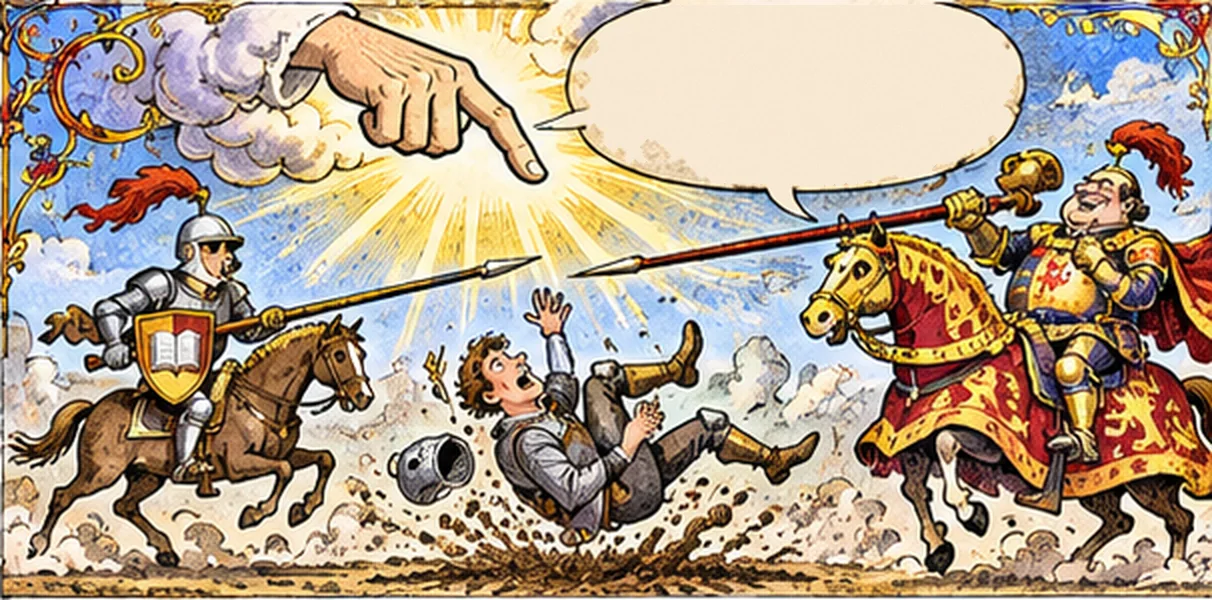
A voice from the clouds: God has decided! The Baron is right.
A fair contest. The Baron supplied the lance.
 The Angel of Progress
Angel: Poor fellow! In six centuries there will be courts. No lances. Only law — and reasons, in writing.
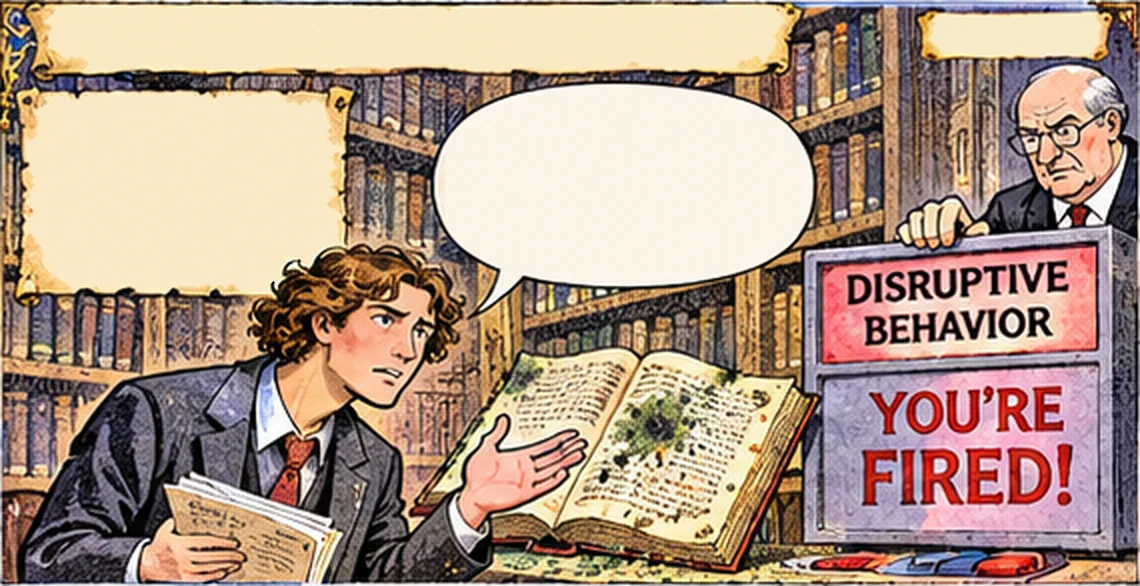 Six Centuries Later
Six centuries later. A great national library.
Scholar: I put it in writing. I told the Inspector General.
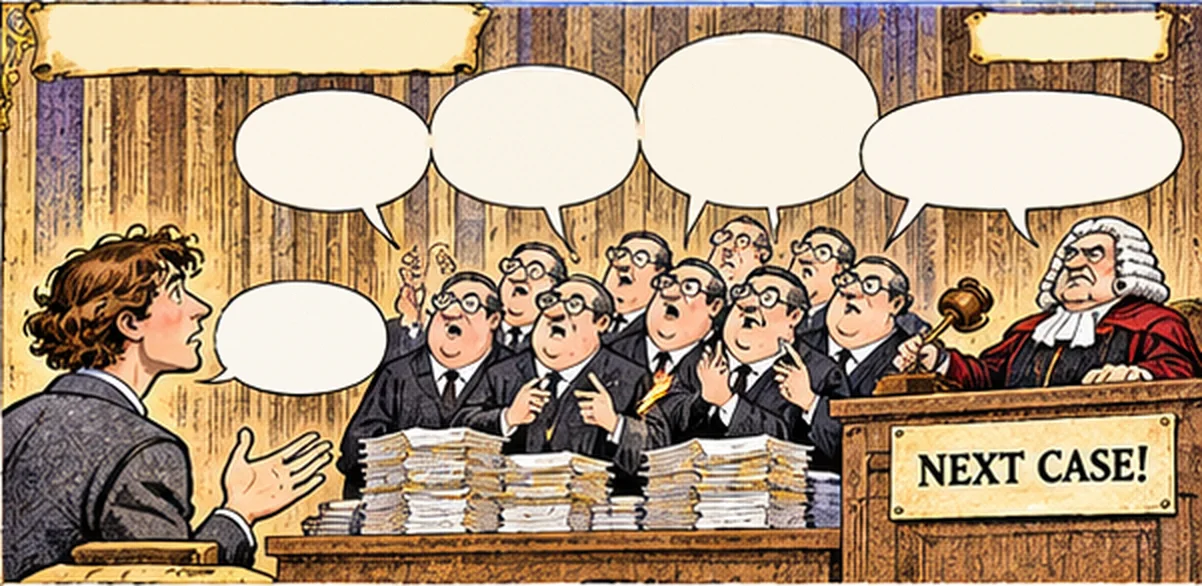 The Hearing
Lawyer: Outside his purview!
Lawyer: He was told to stop!
Lawyer: No statute covers it!
Lawyer: DISRUPTIVE!
Scholar: But was I wrong?
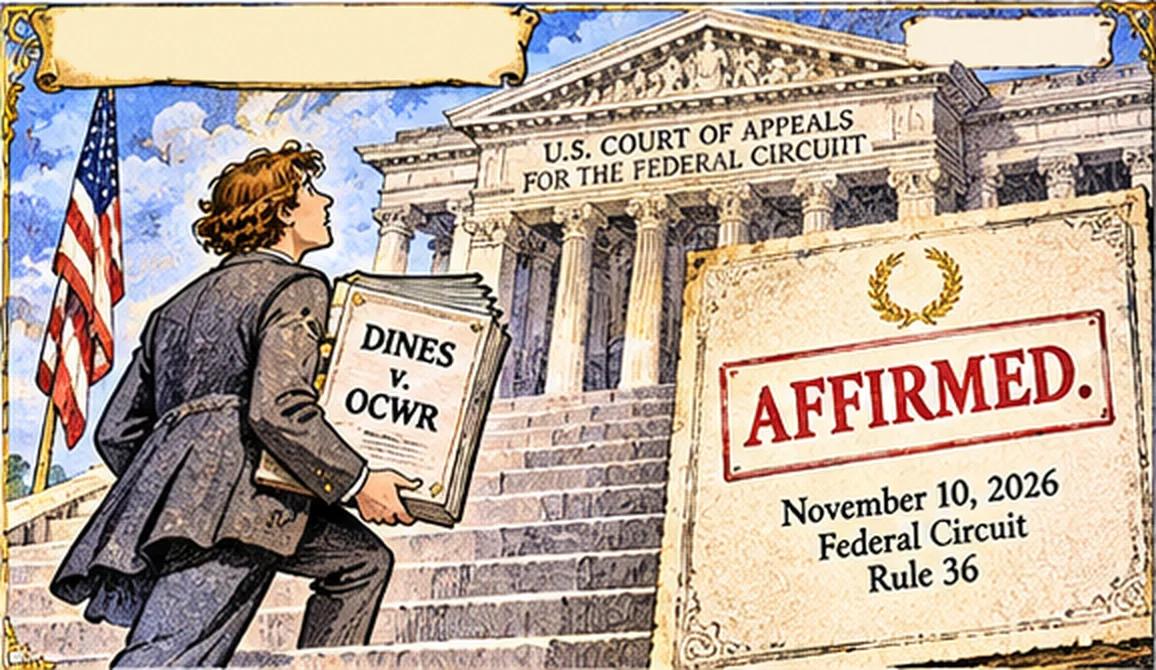 The Appeal
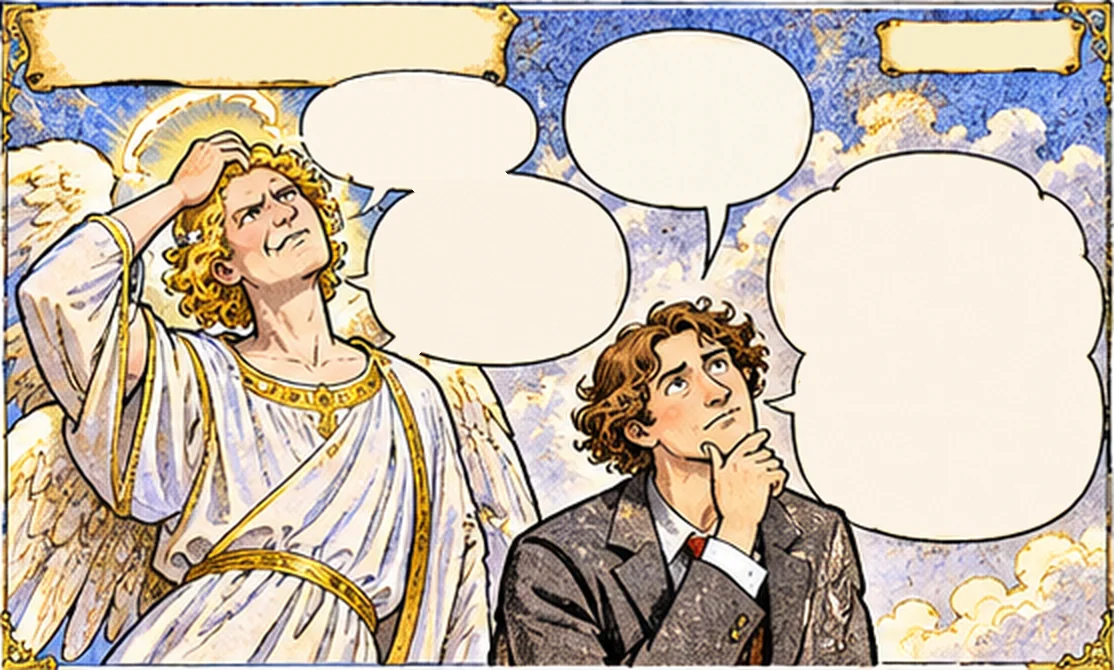 The Angel Returns
Angel: Six centuries of progress…
Angel: …and now no one has to explain.
Scholar: So who was right?
Scholar: In the Middle Ages, at least you could see the lance.
What the record shows
Dr. Ilya Dines came to the Library of Congress as a Kluge Fellow in 2015, worked as a contractor describing its medieval manuscripts, and in November 2022 was appointed Librarian (Codicology Specialist) in the Law Library after a competitive selection.
In 2023 he reported to his supervisors that the Library was overpaying for acquisitions, that items in its collection were stored in conditions that damaged them, including mold, and that there were problems with digitization. He submitted photographs of manuscripts he identified as damaged by mold. His second-line supervisor wrote: “Is it possible the Library has paid high prices for acquired items, absolutely.”
He was told that acquisitions were outside the Law Library’s purview. In mid-August 2023 he took his concerns to the Library’s Office of Inspector General and its Office of General Counsel. He was dismissed on September 20, 2023.
The Merits Hearing Officer found that the Library “did not provide the Claimant with any written negative remarks concerning his work products.” The same decision listed his repeated raising of acquisition and digitization concerns among the conduct on which the Library relied.
“…the Claimant repeatedly raised concerns about the Respondent’s acquisition processes despite being told by management on numerous occasions that these processes were not within the Law Library’s purview. … The Claimant escalated these issues to the senior managers in the entire Law Library.” Decision of the Merits Hearing Officer, OCWR No. 23-LC-44, July 8, 2024, at 18 (Pet. App. 41a–42a)
The Library’s position
The Library maintains that his concerns were outside his duties, that management repeatedly told him so, that several staff described the way he raised them as aggressive and unprofessional, and that he was dismissed for legitimate, non-retaliatory reasons, including its conclusion that he gave an untrue account of a September 13, 2023 meeting. As a term employee, he was at will.
His argument
Reports of waste and of damage to the national collection cannot lawfully be counted as grounds for dismissal. If the Congressional Accountability Act allows it, then Congress’s exclusion of its own employees from the protection it gives executive-branch whistleblowers raises a question under the equal-protection component of the Fifth Amendment’s Due Process Clause.
- 2015Kluge Fellow at the Library of Congress.
- 2017 – 2022Contractor describing the Library’s medieval manuscripts.
- Nov. 2022Appointed Librarian (Codicology Specialist) after a competitive selection.
- Spring – summer 2023Reports overpayment, mold and digitization problems to his supervisors.
- Mid-Aug. 2023Takes acquisition concerns to the Inspector General and the General Counsel.
- Sept. 20, 2023Dismissed by letter of the Law Librarian of Congress.
- July 8, 2024OCWR Merits Hearing Officer rules for the Library.
- Mar. 24, 2025OCWR Board of Directors affirms. Reconsideration denied Apr. 28, 2025.
- Nov. 10, 2026Federal Circuit affirms without opinion (Rule 36), No. 2025-1657.
- NextPetition to the U.S. Supreme Court: being printed, to be filed in the coming days. Deadline Feb. 8, 2027. No petition for rehearing was filed.
The gap
Same report. Different branch. No remedy.
When Congress applied federal workplace laws to itself in 1995, it left out the Whistleblower Protection Act. For more than a decade the Board of the Office of Congressional Workplace Rights has asked Congress to close that gap. It has not.
An agency employee reports gross waste of funds
- Protected by the Whistleblower Protection Act, including for reports to managers
- If the report contributed to a firing, the agency must prove by clear and convincing evidence that it would have fired the employee anyway
- Independent remedies: Office of Special Counsel, Merit Systems Protection Board, reinstatement, back pay
A Library employee reports the same thing
- The Whistleblower Protection Act does not apply (5 U.S.C. § 2302(a)(2)(C))
- A report made only to managers has no statutory protection against reprisal, and may be counted as “disruptive behavior”
- Reprisal for a report to the Inspector General is forbidden (2 U.S.C. § 185(d)), but no express individual remedy exists
- No appeal to the Merit Systems Protection Board
The law requires the Library’s Inspector General to report to Congress every six months on “instances of whistle blower retaliation.” In the March 2026 report, that line reads “N/A” (p. 39). Reading the Record No. 1 →
No Library employee has won a case before the OCWR Board since 2019. Before the Board →
Full legal analysis: Kriger, Boris. 2026. “Rights Without Remedies: Bundled Causation and the Legislative-Branch Whistleblower Gap.” Legal Research & Analysis 4 (4): 24–43. https://doi.org/10.69971/lra.4.4.2026.217
Documents
Read it in the original.
The decisions and briefs will be deposited in a permanent public archive with their own DOIs and linked here. Until then, journalists and researchers can request any of them through the Press Room.
| Document | Date | Availability |
|---|---|---|
| Petition for a writ of certiorari, U.S. Supreme Court | Nov. 2026 | Published here upon filing |
| Judgment, U.S. Court of Appeals for the Federal Circuit, No. 2025-1657 | Nov. 10, 2026 | On request · text on Leagle |
| Brief of the Office of Congressional Workplace Rights, No. 2025-1657 | Sept. 22, 2025 | On request |
| Order of the OCWR Board denying reconsideration, No. 23-LC-44 | Apr. 28, 2025 | On request |
| Decision of the OCWR Board of Directors, No. 23-LC-44 | Mar. 24, 2025 | On request · also on ocwr.gov (PDF) |
| Decision of the Merits Hearing Officer, No. 23-LC-44 | July 8, 2024 | On request |
| Letter of the Law Librarian of Congress terminating employment | Sept. 20, 2023 | On request |
| Joint Appendix, Federal Circuit (673 pp.; contains testimony and personal data) | 2025 | On request to journalists |
Seen something in the Library that should not be happening?
Overpayment, damage to collections, records that do not add up. Tell us. You do not have to give your name.